City Approach Community Dialogue Outline
STEP 1: COMMUNITY DIALOGUE TOPIC SELECTION
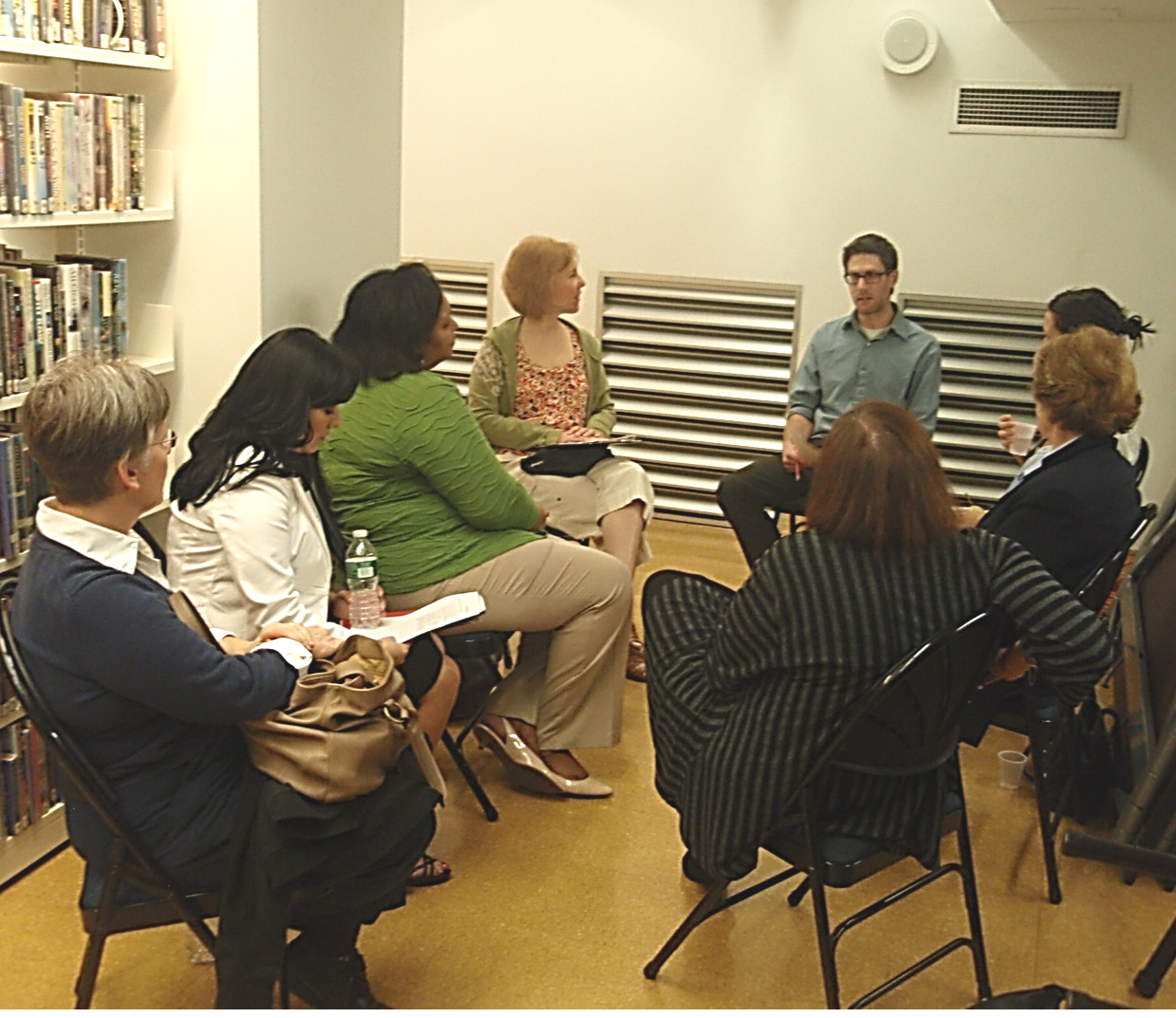
June 2011: The IMLS Advisory Team and the Immigrant Advisory Group (IAG) held several planning meetings concerning the first Community Dialogue.
July 2011: a three-hour sample dialogue workshop was held to provide 25 participants with a hands-on experience of what the Community Dialogue model process looks like.
August 2011: the IAG held a brainstorming session to identify possible topics for first Community Dialogue identified.
September 2011: A survey was also distributed to a broader community mailing list to generate additional input on possible topics from both immigrants and non-immigrants.
Based on the brainstorming and survey efforts, it was decided to focus the first Community Dialogue on the topic of Education & Employment which was later narrowed down to Adult Learning.
STEP 2: KICKOFF EVENT & RECRUITMENT OF DIALOGUE PARTICIPANTS
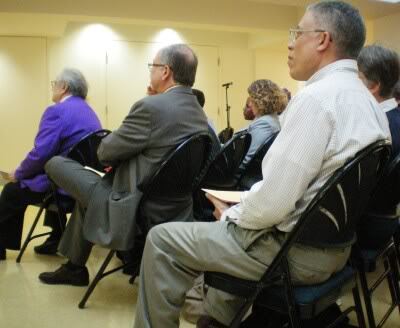
A kickoff event was coordinated to help call attention to the Community Dialogues, build enthusiasm, and recruit participants for the dialogue.
The event was picked up by the local media, which drew approximately 100 people. Guest speakers included City Mayor, Pedro Segarra.
Community Dialogue Flyer English
STEP 3: COMMUNITY DIALOGUES
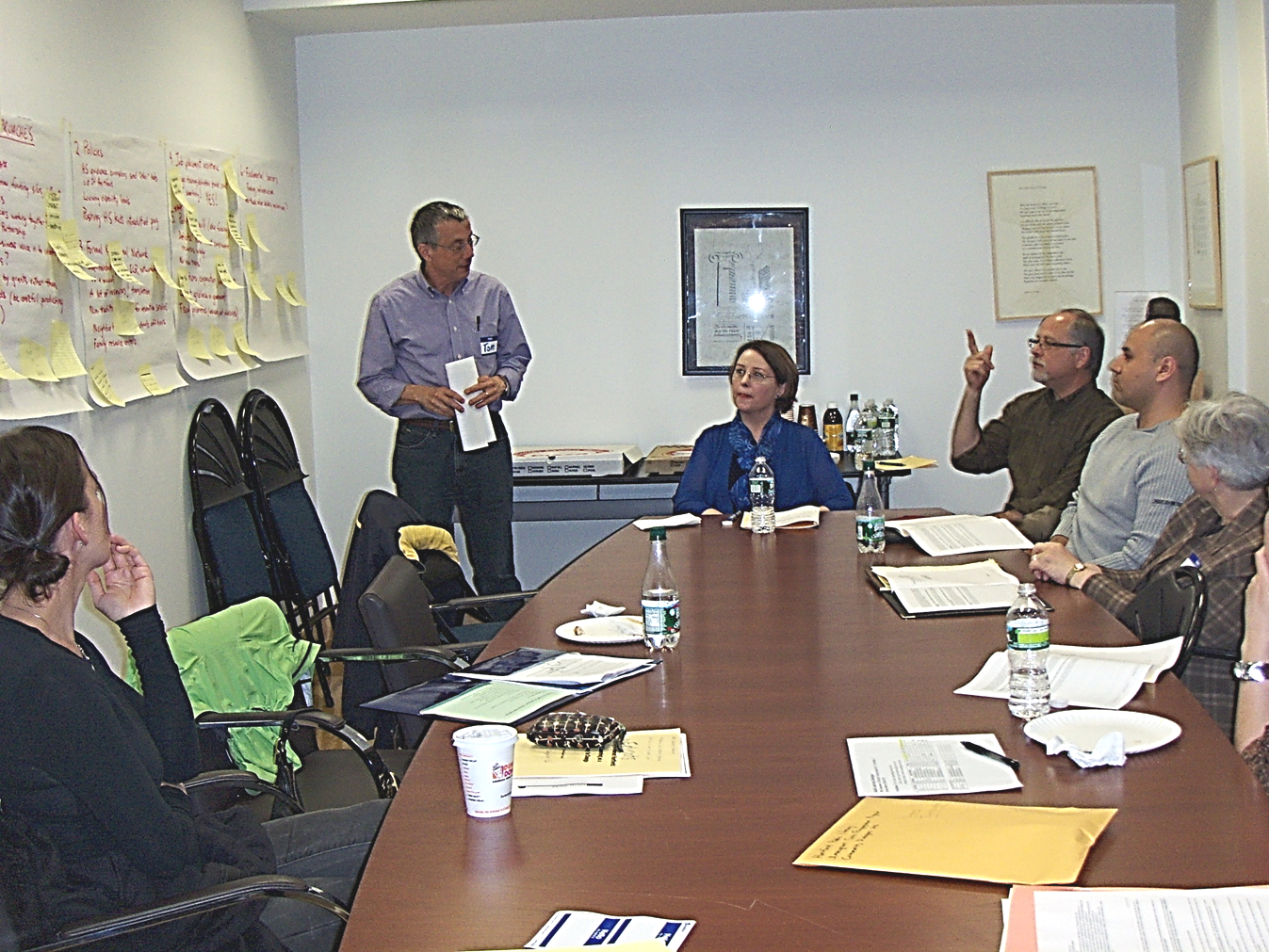 Sixty participants were recruited and organized into seven dialogue groups, which convened at Hartford Public Library Downtown branch and Center for Hartford Adult Education Center (CAEH) from April to May 2011.
Over half of the dialogue participants were service providers or adult learning advocates and over a third of the participants were foreign born. The group at CAEH was entirely made up of immigrants. The dialogues were held for four consecutive weeks for 2 hours each; many people were unable to make such a large time commitment to the dialogues.
Dialogue facilitators were recruited from the Kickoff event and attended an 8-hour facilitator training led by Everyday Democracy.
Both facilitators and participants received a guide prepared by a working committee composed of project and Everyday Democracy staff and IAG members.
Facilitator Guide English / Spanish / Participant Guide English /Spanish
STEP 4: ACTION FORUM
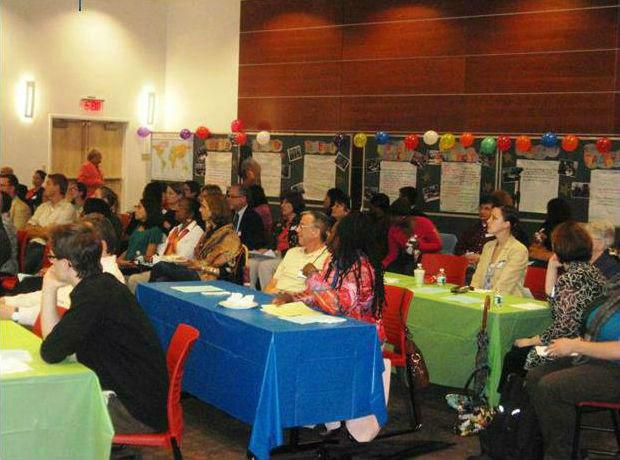 After the dialogues had finished, an action forum was held on May 15, 2012, to present the ideas decided by the seven dialogue groups. The intent was to establish action groups to move some of these ideas forward as well as to encourage particicipants to stay involved.
Over 100 people attended the event and from this event, four distinct action groups were established.
Action agenda centered on four themes:
1) barriers to access and addressing stereotypes
2) accreditation and licensing
3) coordination of services and opportunities
4) supporting formal and informal networks
Action Forum Flyer English / Spanish / Action Agenda Topics English
STEP 5: ACTION GROUPS
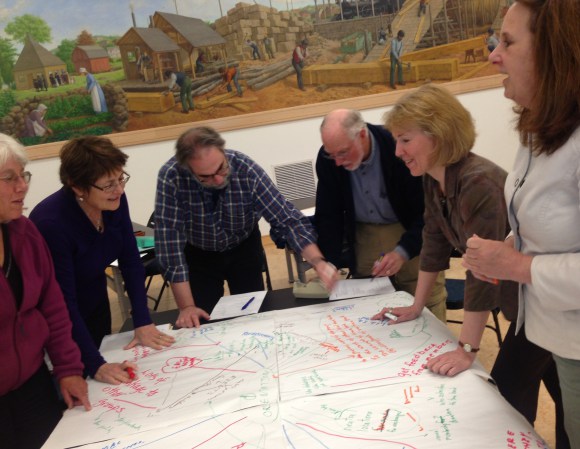 Since June 2012, the four action groups met regularly and progressed towards action. Of the original four groups, two emerged to form cohesive entities and are currently moving forwards with achievable objectives and plans of action.
The Formal/ Informal Networks action group focused its efforts on a language and culture learning exchange in the form of a time bank. In this member-led community exchange, members earn, bank, and spend "time credits" as the exchange of services takes place.
A time bank serves to foster community connections between individuals, helps members to recognize and strengthen skills they might undervalue, and creates a sense of value through reciprocity, inclusivity, and diversity. The implementation of the Hartford community-based time bank is in its final stages.
For more information, contact Bil at upholt@comcast.net
The Coordination of Services and Opportunities action group's mission to create a user-friendly, comprehensive database of adult learning resources for Hartford's diverse community has led to a focus on Key Train and a Learner's Web initiatives.
The action group, through its connections with Capital Region Education Council (CREC) has formally partnered with Move-Up (formally Capital Regional Adult Literacy Partnership) to establish a Learner Web. This web application is designed for adult learners to help improve digital literacy skills, create individualized learning plans, and learn through self-directed instruction.
For more information, contact Sarah Dudzic at (860) 899-3469 or email sdudzic@capitalworkforce.org.
 DONATE














 Phone: (860) 695-6300